Many of us have made some kind of mistake when it comes to paint. You may have ordered too much, or perhaps dislike the colour now you have seen it on an entire wall. There is a lot of conflicting information out there and it can be difficult to know how to correctly dispose of or re-use your paint.
Today, we are going to explain exactly what you should and shouldn’t do.
- Paint in good condition
- Paint in bad condition
- Purchasing the correct amount of paint
Paint that is in good condition

If your paint is in a perfectly usable condition, there are a few things you can do before letting it go to waste.
- Offer the paint to family or friends. They may be able to use it for all sorts of things.
- Advertise it on social groups such as on Facebook. You will find DIY-ers and up-cyclers that may be able to use it.
- Donate it to the Community Re-paint Project. They will collect leftover paint and distribute it to families, communities and charities. This fantastic scheme helps in various ways. From refreshing spaces for the community, helping to create murals and assisting those on a low income to redecorate. Not only that but they also provide employment, training and volunteer opportunities, offering valuable skills and experience.
Paint that is bad condition
Paint is made up of a variety of ingredients, one of which being water. It also has a use-by date and so once mixed, the paint will only be able to remain in that state for a certain period of time.
The more ‘liquid’ ingredients will slowly separate from the ‘firmer’ ones. You may even find this has begun when it has been opened directly after buying! This is the reason you should always shake or mix the paint thoroughly before use.
As soon as the can has been opened, the separation will kick into gear, speeding up the process. You will often find that even if you close the lid tightly and securely, over time it can still sadly separate. Eventually, it will get to a point where no matter how much you mix the paint, it just simply will not blend together again and sadly cannot be used.
So, with that being said, what are your options?

Firstly, it will depend on what state the paint is in. If it is still wet but cannot be reused due to splitting etc. you will need to dry it out so that it is safe for disposal.
We hope it goes without saying but you must not pour paint down any drains. Paint is toxic to plant and aquatic life and is terrible for the environment. In fact, it is illegal to pour paint down the drain according to the Water Industry Act 1991. You also cannot simply throw the paint in with your normal household waste.
If you have a lot of paint left you can mix sawdust or sand into it and then simply leave the lid off until it dries out. Alternatively, if you only have a small amount of paint, you can simply paint the excess onto a sheet of cardboard. Then, once it is dry, dispose of the cardboard.
If the paint appears to be dry in the tin, poke it with a paintbrush handle or stick to test and make sure it is completely dried up. If it is, there is nothing else you need to do and it is ready for disposal.
Once the paint is dry, you can then take it to your local household waste recycling centre. There are also some licenced waste removal companies that will come and collect your paint.
Purchasing the correct amount of paint
According to the Community Re-Paint Project, it is estimated that 50 million litres of the 320 million litres of paint that is sold in the UK every year goes to waste. This is an enormous and unnecessary amount. To help assist you with how much you will need, each of our product pages have a ‘How much do I need?’ calculator.
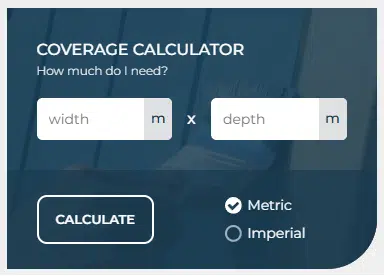
All you need to know is the approximate width and height of the area in which you are painting and our handy calculator can do all the hard work for you!
We hope you found this post helpful. If you have any other tips or advice, please feel free to leave them in the comments below. We love hearing from you!
To keep up to date with all things Owatrol, why not follow us on social media? You can find us on Facebook, Twitter, Instagram and Pinterest.

About Owatrol Team
Our team are ready and willing to support you with your requirements whether it is protecting your newly laid deck or renovating a luxury yacht, whatever the application Owatrol has the solution you are looking for.