

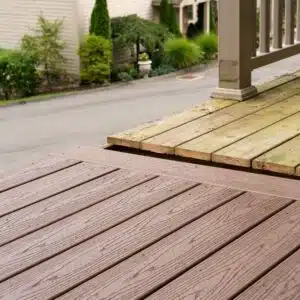
Adding a garden deck is one of the most effective ways to extend your outdoor living space. However, it can be confusing when it comes to choosing the material.
Whilst hardwood decking (such as Ipe, Balau or Teak) was historically standard, composite decking has gained massive popularity due to its durability and low maintenance requirements.
To help you decide, this guide compares hardwood and composite decking across the five key decision factors: initial cost, visual appeal, practical usage, maintenance and lifespan and environmental impact.
Jump me to:
1) Upfront cost & value
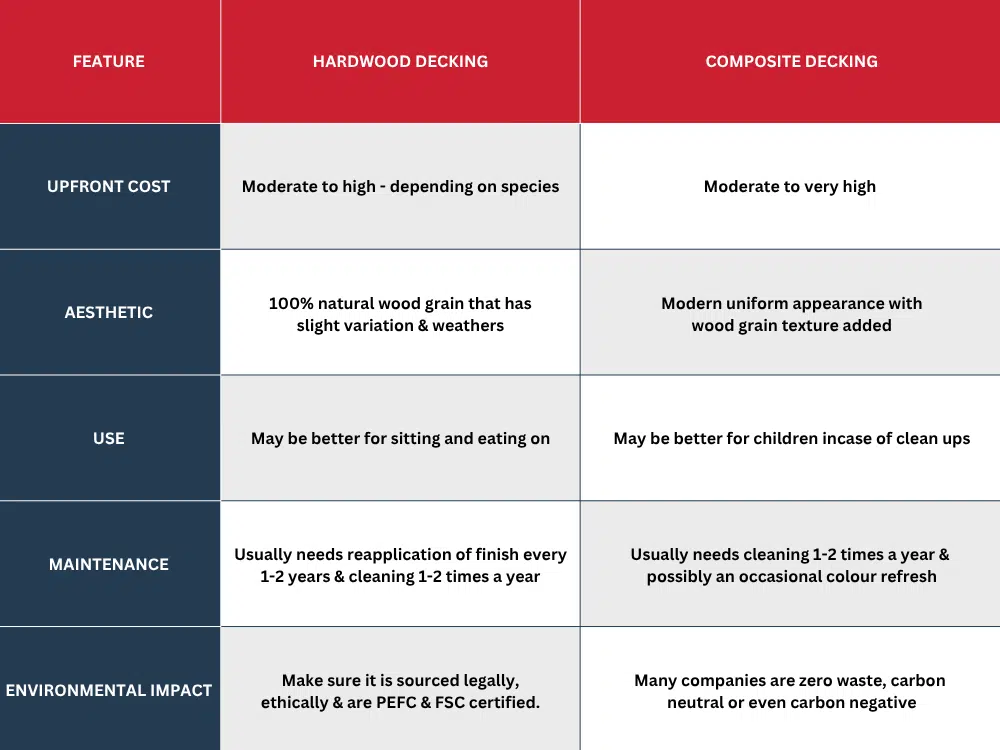
When looking at initial supply and installation costs, hardwood decking is generally cheaper upfront than high-end composite boards. Though prices vary depending on the wood species and board quality.
Hardwood Decking: Premium hardwoods (such as Bankirai or Ipe) carry higher price tags than softwoods (like Pine or Spruce), but typically remain lower in raw material cost compared to premium composite decking.
Composite Decking: Composite woods require a specialised manufacturing process that combines recycled plastics with wood fibres. This process makes composite boards more expensive to purchase.
Why is composite decking more expensive?
Unlike natural timber, which is simply felled, cut and kiln-dried, composite wood relies on specialised machinery to combine wood fibers, polymer resins and bonding agents under high heat and pressure.
The verdict?
If initial budget is your primary constraint, hardwood (or even softwood) offers a lower entry point. However, composite decking often balances out over time due to lower maintenance costs.
2) Aesthetics & Design
How your garden deck looks and feels will dictate the overall atmosphere of your outdoor area.
Hardwood Decking: Delivers authentic natural beauty with unique grain patterns, deep colour variations and tactile warmth. Over time, untreated hardwood weathers to a silver-grey patina. Some homeowners prefer this natural aging process for its rustic character.
Composite Decking: Offers a sleek, contemporary aesthetic with consistent colours ranging from charcoal and grey to warm oak tones. Higher-end capped composites feature engineered grain textures that closely imitate real timber, without fading or silvering significantly over time.
The Verdict?
Choose hardwood for traditional, organic character and natural variation. Choose composite for clean lines, modern styling and long-term colour uniformity.
3) Practical Usage & Safety

Consider who will be using your garden space and how you plan to entertain.
For Families & Children: Composite decking is often the safer option for barefoot walking and play areas. Because it is manufactured from compressed wood fibers and plastic, composite boards will not splinter, warp or form sharp edges.
For Dining & High-Traffic Areas: Hardwood provides exceptional structural rigidity and resistance to impact damage from heavy outdoor furniture or dining sets. However, natural timber can develop micro-splinters as it reacts to changing weather conditions.
The Verdict?
Composite is ideal for child-friendly spaces and pool surrounds; hardwood excels in heavy-duty entertainment zones where raw structural strength is required.
4) Lifespan & Maintenance
Both materials offer multi-decade lifespans, but they demand significantly different levels of upkeep.
Hardwood Decking Upkeep
Untreated hardwood will split, warp and dry out due to UV exposure and moisture intake. To protect your investment:
- Apply a high-penetration, non-film-forming wood oil such as Owatrol Textrol, Aquedecks or D.1 Pro
- Clean periodically using Owatrol Net-Trol to remove ground-in dirt, algae and wood greying
- Refresh the protective finish every 1 to 2 years to keep the timber supple and water-resistant
Composite Decking Upkeep
Composite decking generally requires no staining, sealing, or painting. Maintenance involves:
- Regular sweeping to remove leaves and organic debris.
- An occasional deep clean with a specialised composite cleaner like Owatrol Compo-Clean to strip away oil, grease and surface pollution in under 10 minutes.
Crucial Tip for Deck Longevity:
The primary cause of failure for both hardwood and composite decks is sub-frame rot caused by inadequate ventilation and poor drainage beneath the joists. Always ensure your support structure allows adequate airflow.
5) Environmental Impact

Sustainability has become a decisive factor for homeowners seeking to minimise their carbon footprint.
Hardwood Decking: Natural timber is renewable and biodegradable. However, tropical hardwoods must be sourced responsibly to prevent deforestation. Always verify that timber carries FSC (Forest Stewardship Council) or PEFC (Programme for the Endorsement of Forest Certification) certifications to ensure ethical forestry practices.
Composite Decking: Most reputable composite manufacturers utilise recycled post-consumer plastics (like milk bottles and bags) and reclaimed timber scrap. Many manufacturing facilities operate on zero-waste or carbon-negative processes. We have heard these terms, but what do they mean?
Zero-waste means that nothing in the manufacturing process is thrown away to be put into landfill, incinerators or the ocean and that no water waste is created. Everything is either used or put back into the process to be recycled.
Carbon-negative means that the manufacturing process of a product actually removes carbon dioxide from the atmosphere rather than adding to it. This means they are creating a carbon negative product.
Frequently Asked Questions
Which lasts longer, hardwood or composite decking?
When properly maintained with protective wood oils, premium hardwood decking can last 30 to 40+ years. Composite decking typically lasts 25 to 30 years and comes with long-term manufacturer warranties covering fade and stain resistance.
Does composite decking get hotter than wood in the sun?
Yes, composite boards, especially darker shades, tend to retain heat more than natural hardwood when exposed to direct sunlight.
Can you restore weathered hardwood decking?
Yes. Weathered or greyed hardwood can be restored to its natural tone using a wood cleaner and colour restorer, such as Owatrol Net-Trol. We recommend following up with a finishing product such as Owatrol Textrol, Aquadecks, Decking Paint or D.1 Pro.
So there we have it, this is our comparison of hardwood vs composite wood decking. If you are still unsure or have any questions, feel free to contact us.
As always, if you have any tips or advice, please feel free to leave a comment below.
We love hearing from you! If you share your project on Facebook, Instagram, TikTok or Pinterest please feel free to tag us @owatrolUK or use #owatrolUK so we can see and share your hard work!


About Owatrol Team
Our team are ready and willing to support you with your requirements whether it is protecting your newly laid deck or renovating a luxury yacht, whatever the application Owatrol has the solution you are looking for.






Thanks for that information, but which composite is the best to buy,thank you.
Hi David,
As far as which composite wood brand is the best, it all comes down to personal preference and budget. Our advice would be to speak to a professional who will be able to advise you better.
All the best,
The Owatrol Team
Question: I have a cedar sunroom. Walls and ceiling. It has not been treated in any way over the last 27 years. Can you suggest a product to rejuvenate the wood? It is extremely dry, and looks it too!
Hi there Laura,
Thank you for contacting us in regards to your cedar sunroom. We have many products that would be perfect for renewing your wood. Please feel free to contact us to discuss your options in more detail:
Tel: 01582 592707
Email: sales@owatroluk.com
We look forward to hearing from you.
All the best,
The Owatrol Team