Whether you are a seasoned metalworker in a body shop, a classic car enthusiast building your dream vehicle, or a fan of top-tier craftsmanship, you know that restoring vintage vehicles is a balancing act between historical preservation and long-term protection.
In this post:
- Dominic Chinea’s classic car restoration series
- The challenge of traditional coach enamels
- Enter the secret weapon: Owatrol Oil paint additive
- How to use Owatrol Oil on your classic vehicle project
In a recent episode of his highly popular YouTube car restoration series, expert craftsman and TV restorer (The Repair Shop) Dominic Chinea tackled another milestone on his iconic Land Rover Series 1 project: painting the new front panel and bulkhead.
Dominic Chinea’s classic car restoration series
It wasn’t just his choice of a retro Porsche colour (Apricot Beige) that caught our attention, though. It was a little trick he used right before loading up his spray gun – the addition of Owatrol Oil paint conditioner to his coach enamel paint. If you watched the episode, you saw how smoothly the paint applied. If you haven’t watched it yet, we recommend you do so now, below!
So, why do master restorers like Dominic rely on Owatrol Oil as a paint additive? Let’s break down the science behind this workshop secret and how it can help you with your vehicle restoration.
The challenge of traditional coach enamels
For his Series 1 Land Rover, Dominic chose a traditional coach enamel supplied by Paragon Paints. As he points out in the video, modern two-pack paints can often look “too modern and plasticky” on an era correct 1950’s vehicle. Traditional coach enamels offer that rich, authentic, glossy depth that perfectly mirrors what you would have seen historically.
However, traditional oil based enamels are notoriously sensitive to environmental conditions. Especially if you’re spraying in a workshop or drafty barn, where weather warnings, sudden gusts of wind and fluctuating temperatures are the reality.
Without a conditioning additive, oil-based paints can suffer from:
- Poor flow: Leading to ‘orange peel’ like textures or worse, visible brush/roller/spray marks.
- Improper adhesion: Especially on complex assemblies with tight nooks, crannies and overlapping metal joints.
- Rust creep: Moisture penetrating microscopic pores in the paint over time, triggering rust beneath your hard work.
Owatrol Oil paint additive
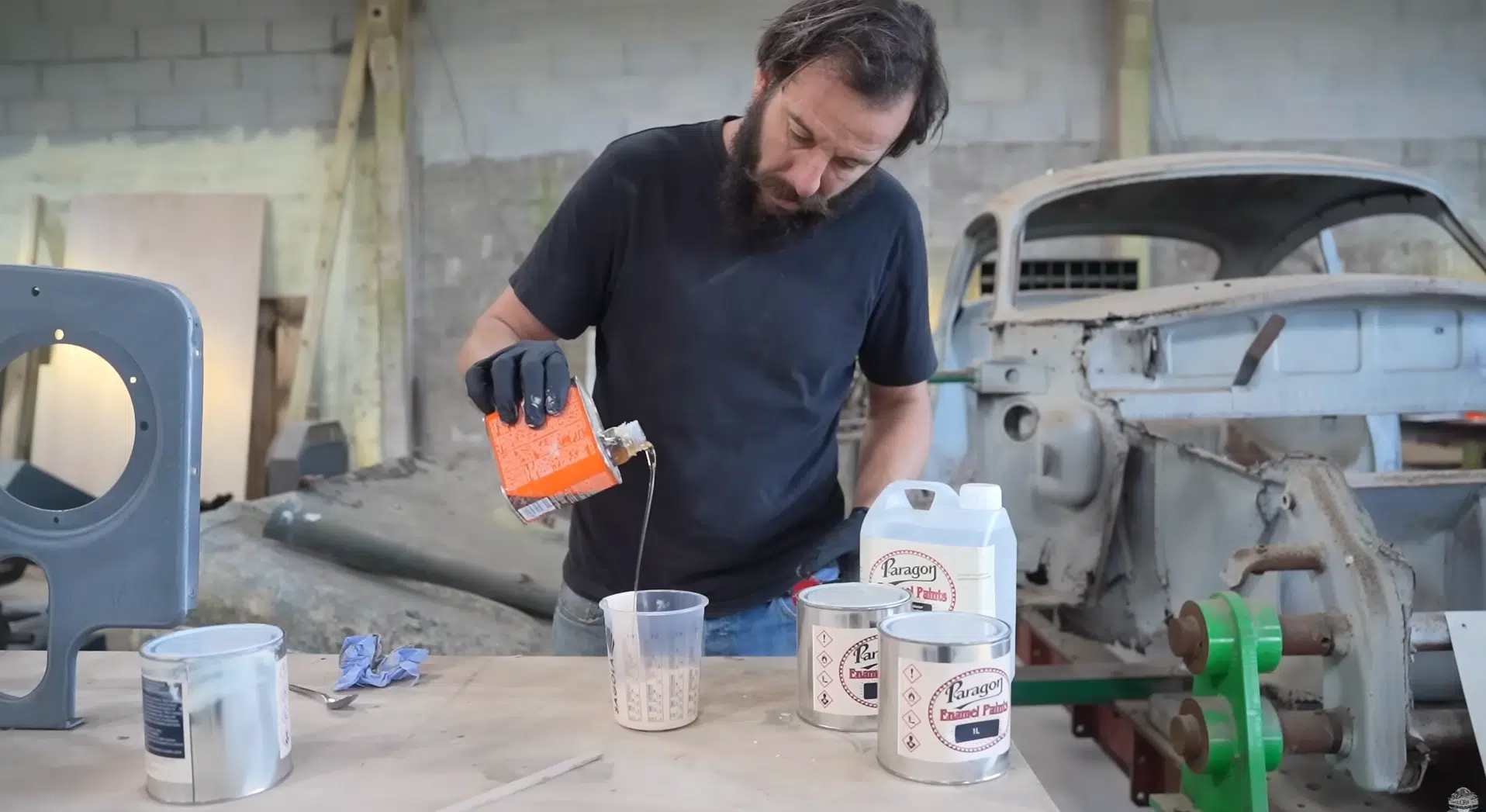
Right before spraying his new front panel, Dominic added a “tiny little drip of Owatrol Oil” into his Paragon Enamel Paint mixture.
He noted two primary reasons for doing this: 1, it acts as a rust inhibitor and 2, it helps the paint flow and settle nicely.
Here is exactly how Owatrol Oil transforms standard paint into a high performance restoration barrier:
1. Wetting and flow properties
Owatrol Oil maintains the ‘open time’ of oil based gloss and enamel paints without thinning them out or damaging the paint structure. It enhances the flow, meaning the paint levels itself out as it cures. This ensures a mirror-smooth finish, devoid of spray texturing, allowing your topcoat to look flawless.
2. Penetrating rust inhibition
Even on brand new primed steel parts or meticulously prepped surfaces, joints and seams are highly susceptible to micro-corrosion. Owatrol Oil has an incredibly high ‘capillary action’. When mixed into paint, it helps the coating creep deep into spot welds, rivets and lap joints, driving out trapped oxygen and moisture to stop rust in its tracks.
3. Flawless adhesion
Owatrol Oil keeps the paint film highly flexible. In the classic car world (especially with vehicles like Land Rovers that experience chassis flex and vibrations), a flexible paint film means your finish won’t easily crack, flake, or peel over time.
Lessons from the workshop
As every restorer knows, the British weather loves to disrupt a paint schedule. Dominic faced sideways rain and heavy winds. After an unexpected gust caught his freshly painted front panel, he had to pause, let it dry and rub it back down to square one.
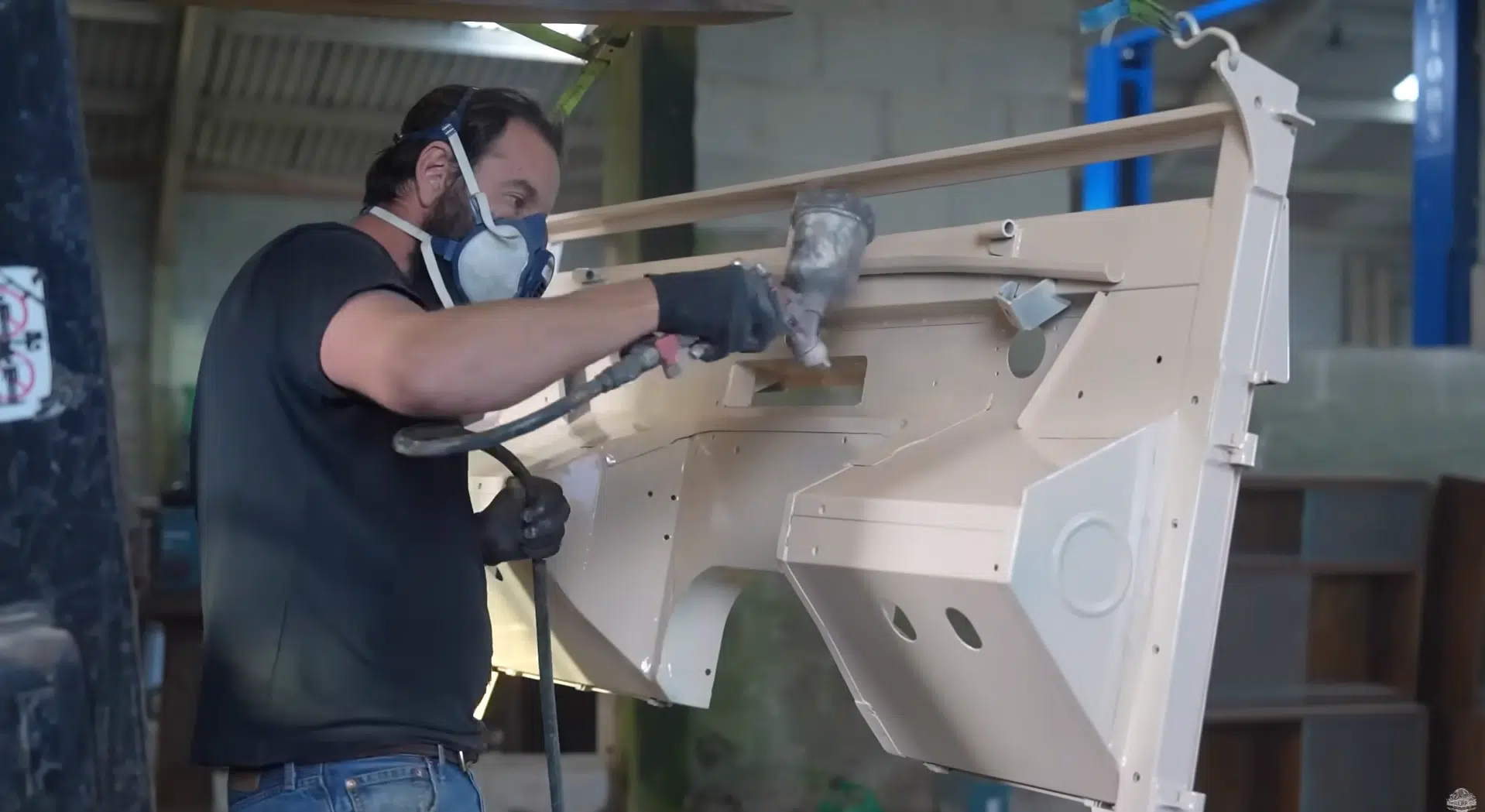
When he moved on to the incredibly intricate Shielder bulkhead, filled with complex brackets and many hard-to-reach recesses, the addition of Owatrol Oil was critical. Because Owatrol improves paint flow and prevents the paint from running prematurely, Dominic was able to get two beautiful coats into all those tricky nooks and crannies without creating unsightly sags.
The result? The bulkhead looked absolutely stunning!
How to use Owatrol Oil on your classic vehicle project
Want to replicate Dominic’s professional finish? Here’s how you can integrate Owatrol Oil into your workflow:
Paint Additive: Mix Owatrol Oil directly into any oil or alkyd based paint, stain, varnish or coach enamel (like Paragon Paints). As a general guide, add roughly 30% Owatrol Oil to your undercoat to boost adhesion and penetration and around 5-20% to the final topcoat to maximise flow and gloss retention.
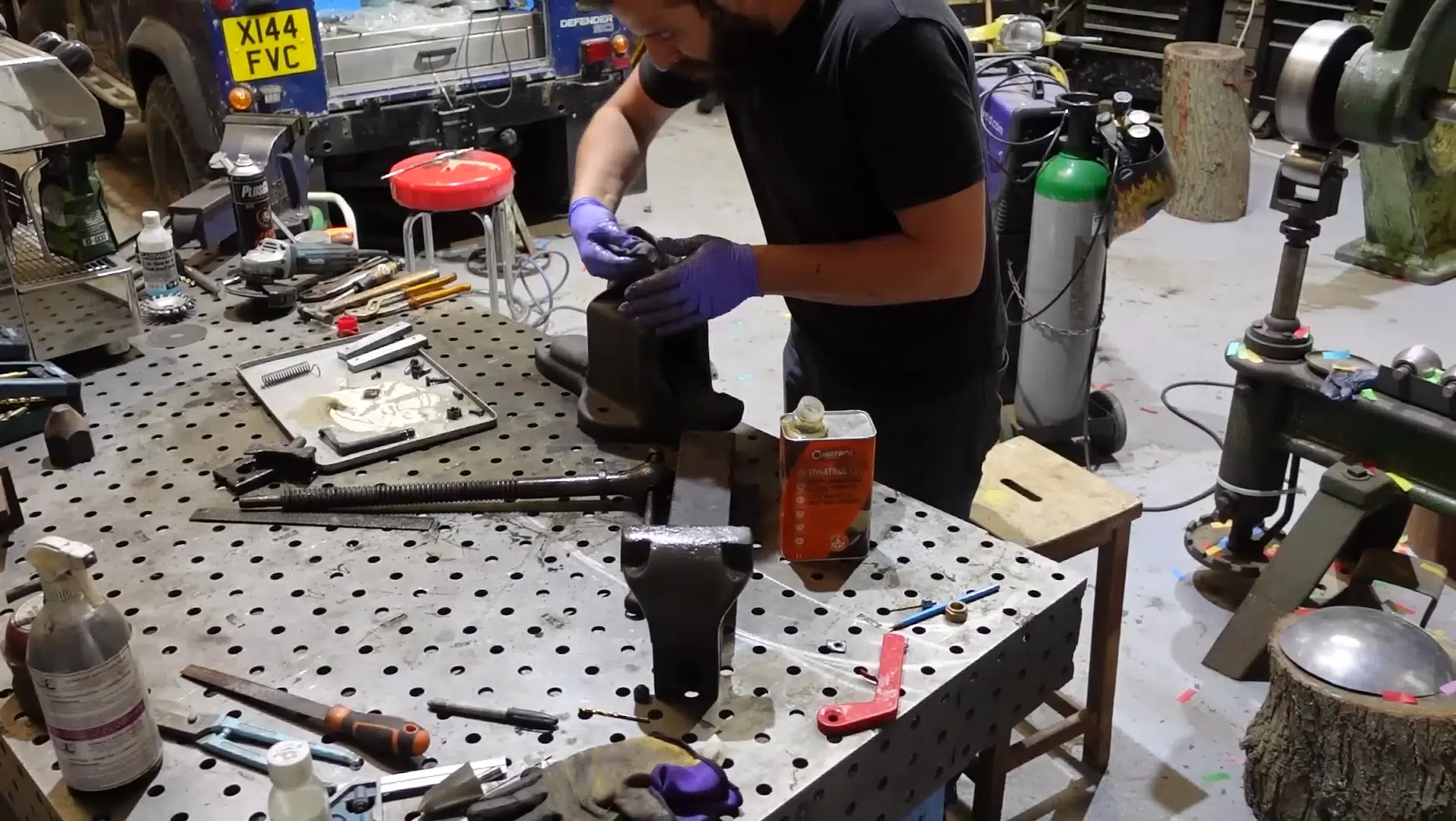
Direct Rust Primer: Dealing with a patinated car or structurally sound surface rust that you don’t want to grind away? Apply Owatrol Oil directly to the dry rust. It will soak through the corrosion right down to the bare steel, isolating it and creating a perfectly stable, paintable surface.
Get the Professional Restorer’s Edge
Dominic Chinea’s Series 1 Land Rover build is proving to be a masterclass in respecting old iron while utilising the best products available, to ensure the build lasts for another 70 years.
By combining expert metal fabrication, high quality UK-made paints and a vital dash of Owatrol Oil, he’s setting up this ‘Apricot Beige beauty’ to withstand whatever the British elements throw at it.
A huge thank you to Dom for using Owatrol Oil on this project. You can learn more about him via his website, as well as on his YouTube and Instagram:
All images and video credit to Dom Chinea.
We hope you found this post on why Dominic Chinea uses Owatrol Oil interesting! If you have any other advice or top tips, please feel free to leave them in the comments below. We love hearing from you!
You can also follow Owatrol UK on Facebook, Instagram, Pinterest or TikTok at @OwatrolUK or join the conversation at #OwatrolUK

About Owatrol Team
Our team are ready and willing to support you with your requirements whether it is protecting your newly laid deck or renovating a luxury yacht, whatever the application Owatrol has the solution you are looking for.